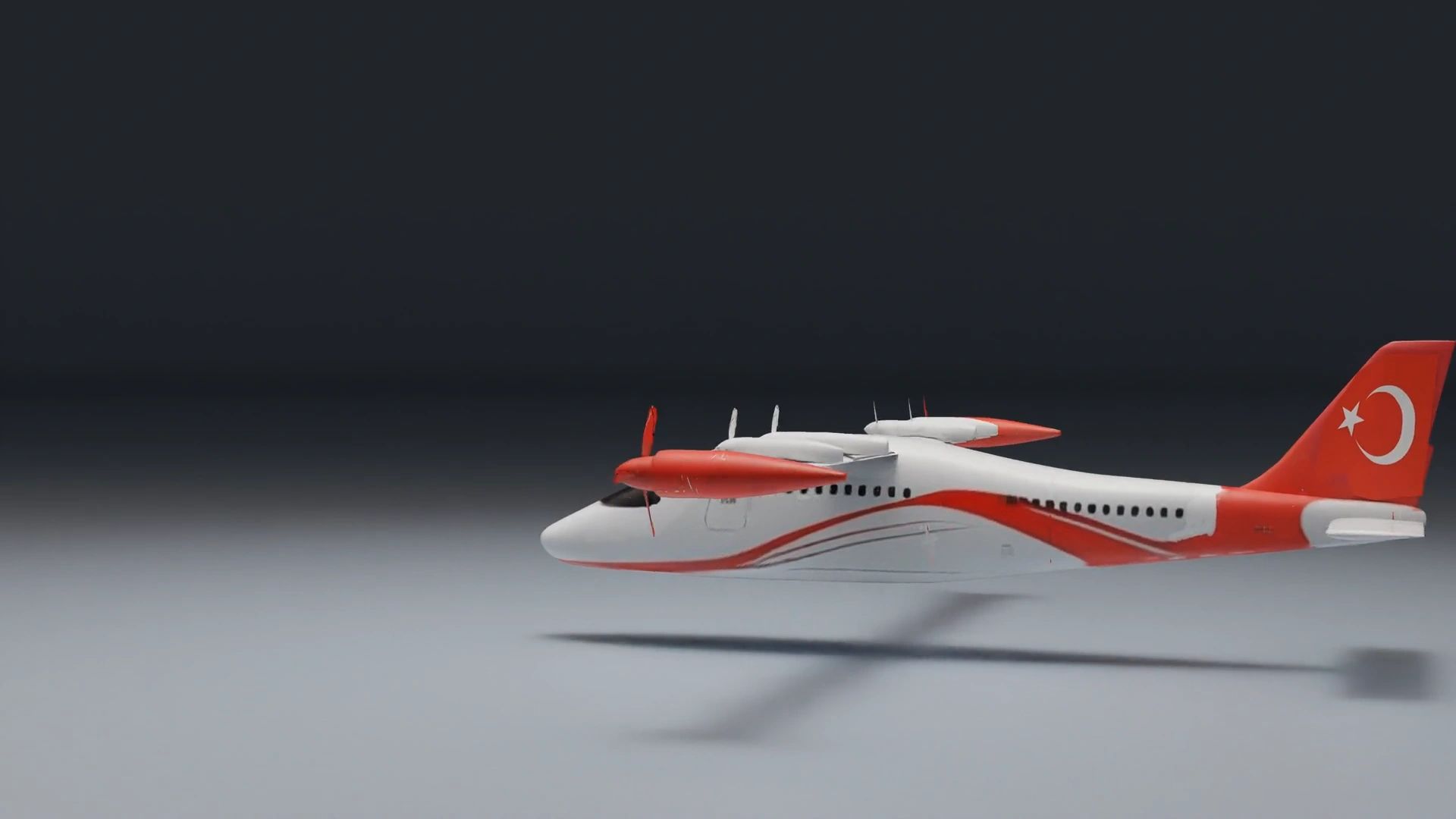
Aerodynamic Analysis of a DEP Surveillance Aircraft
Via Machine Learning and Quantum Approach
Aerodynamic Analysis of a DEP Surveillance Aircraft
Via Machine Learning and Quantum Approach
Via Machine Learning and Quantum Approach
Via Machine Learning and Quantum Approach
Max L/D ratio (beats B737 & Global Hawk)
ML surrogate error vs. full CFD
Quantum-hybrid speed-up vs. classical CFD
Agreement with NASA 2025 CFD reference
OpenFOAM + OpenVSP multidisciplinary framework — k-ω SST turbulence, actuator-disk rotor modelling, energy-thermal and flight-envelope analysis.
Random Forest surrogate over 486 configurations (R² = 0.972), SHAP explainability, and a live Streamlit performance predictor.
A PyTorch + Qiskit variational quantum circuit trained on Lattice-Boltzmann data — a 720× faster preliminary aerodynamic estimator.
The blown-wing effect raised CL by 15% and lifted the platform to L/D = 24.4 — reaching 96.4% of the theoretical efficiency limit at 5.5° angle of attack.
With LiPo batteries the platform sustains 7–10.5 h depending on mass, outperforming medium-class electric UAVs — all at low noise and low thermal signature.
A steam-flow wind tunnel and a 1:9.8, 120 cm-wingspan PLA + foam prototype confirmed a ~14° stall angle — matching the CFD digital twin.
The ML surrogate screened 1,000 designs in seconds with only 1.47% error vs CFD, while the quantum route cut runtime ~720× for early-stage estimates.
Two live Streamlit tools let you predict aerodynamic performance and explore the quantum flow model in real time.
© 2026 Batuhan Türk · İTO Bilim ve Sanat Merkezi

This is a brief interactive preview rather than the full project, giving you a quick look at its key features and concepts. Enjoy exploring!