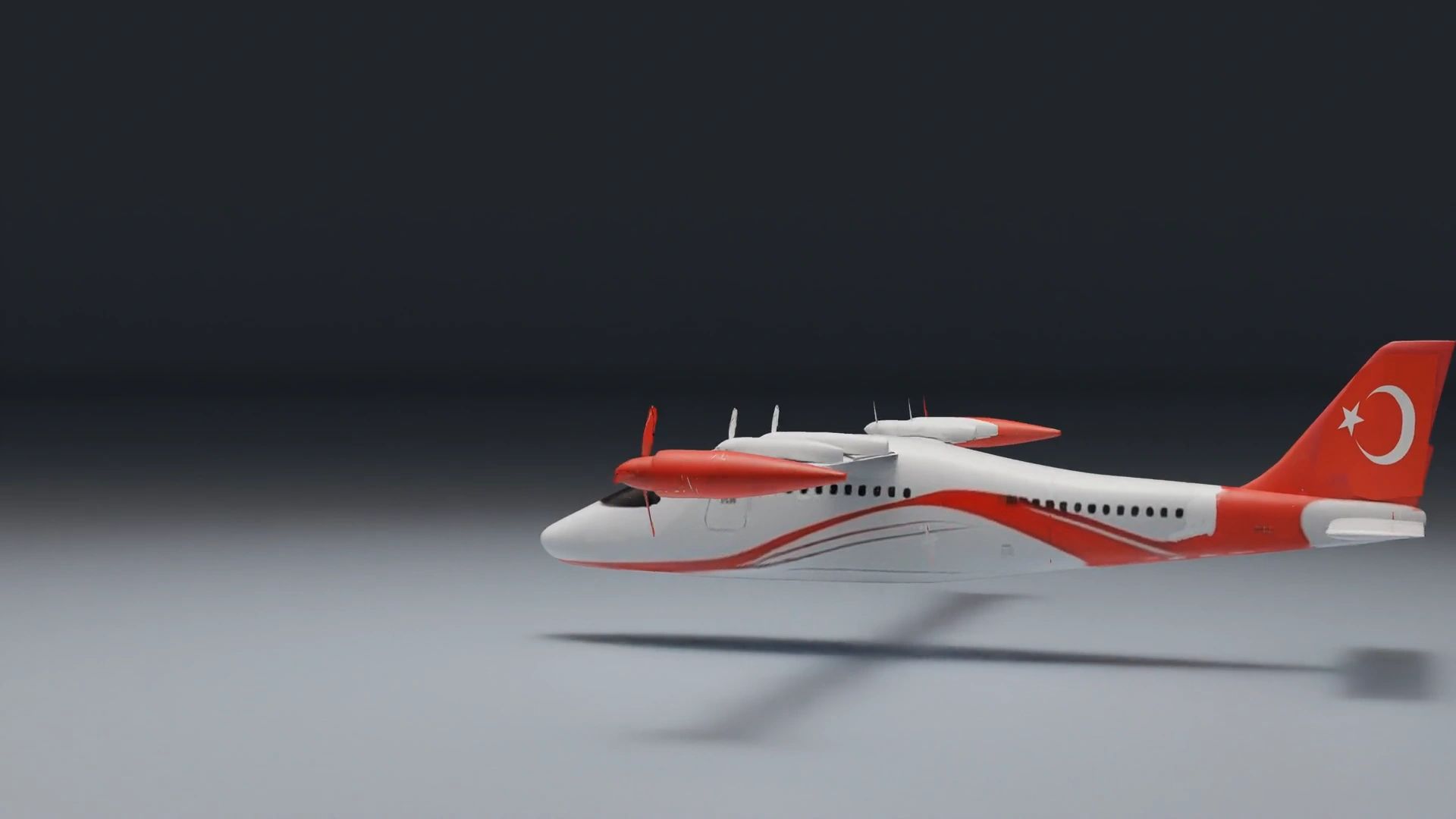
Aerodynamic Analysis of a DEP Surveillance Aircraft
Via Machine Learning and Quantum Approach
Aerodynamic Analysis of a DEP Surveillance Aircraft
Via Machine Learning and Quantum Approach
Via Machine Learning and Quantum Approach
Via Machine Learning and Quantum Approach
Cruise L/D ratio, RANS CFD. Maximum 24.85 on the clean polar.
ML surrogate against an independent CFD case
Faster than solving the flow field from scratch, using a trained surrogate.
Agreement with NASA 2025 CFD reference
OpenFOAM + OpenVSP multidisciplinary framework — k-ω SST turbulence, actuator-disk rotor modelling, energy-thermal and flight-envelope analysis.
Random Forest surrogate over 486 configurations (R² = 0.972), SHAP explainability, and a live Streamlit performance predictor.
A PyTorch–Qiskit variational circuit trained on lattice-Boltzmann data achieved 1.000000 fidelity at 8 × 8. Gate counts grow polynomially for streaming and exponentially for collision, with break-even near 16 × 16.
Over-the-wing rotors raise CL by 12.89 % and CD by 12.01 % at the cruise point, taking L/D from 24.215 to 24.398. Cruise sits at 98.3 % of the clean-polar optimum of 24.85, leaving margin in hand when conditions move.
4.11 h on station at a 100 km radius, from a 306.6 kg pack holding 122.6 kWh at 400 Wh/kg and 80 % depth of discharge. Raw endurance reaches 7.18 h at the same cell energy. Ground-level noise from 3 000 m is 9.1 dB, more than 20 dB below rural ambient, alongside a low thermal signature.
A bench smoke tunnel and a 1:9.8, 120 cm span PLA and foam prototype put separation onset near 14°, in line with the blown CFD case at 14 to 15°. The prototype flies, confirming that the distributed layout can be built and balanced.
The surrogate screens 1 000 designs in milliseconds and agrees with an independent CFD case to 1.0 %. Trained on lattice-Boltzmann data, the hybrid model returns a section estimate about 720 times faster than solving the field.
Two live Streamlit tools let you predict aerodynamic performance and explore the quantum flow model in real time.
© 2026 Batuhan Türk · İTO Science and Art Center

This is a brief interactive preview rather than the full project, giving you a quick look at its key features and concepts. Enjoy exploring!